Supervisor, District 6: Matt Dorsey
 Back to supervisor map
 Back to supervisor map
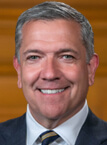
Matt Dorsey
District 6 Supervisor
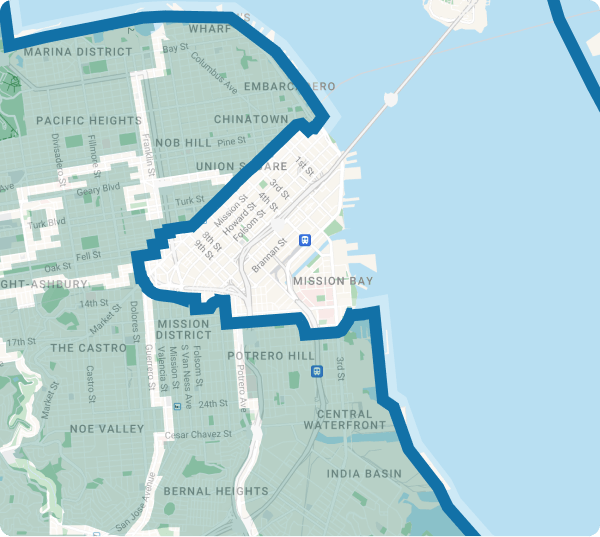
District 6 includes Mid-Market, Rincon Hill/East Cut, South of Market, South Beach, Mission Bay, Treasure Island, Yerba Buena Island, Alcatraz, the Design District, the 6th Street Corridor, and the Leather Cultural District.
Appointed
May 2022
Elected
November 2022
Won by 998 votes.
Up for Re-Election
November 2026


Matt Dorsey is the Supervisor for San Francisco's District 6. Dorsey is an openly HIV positive, out gay man who is the first self-identified member of the substance use recovery community to serve on the Board of Supervisors in a generation.
Sign up for GrowSF's weekly roundup of important SF news!
Policy positions & priorities
Here’s where Supervisor Dorsey stands on the issues:
Housing
A strong supporter of affordable housing, Dorsey has repeatedly emphasized his support for building housing at all income levels in San Francisco. At the time of his appointment to the Board, he described the role of D6 Supervisor as "a forceful advocate for the promise of authentically progressive urbanism" and noted that he was "committed to removing constraints and barriers that make building housing more difficult." Dorsey vocally supported the pro-housing Proposition D, and voted against an ordinance that would have removed fast-track approval for certain developments.
He has noted that "SF is the slowest jurisdiction in the state to move housing projects to construction." In April of 2023, Dorsey introduced an ordinance to reduce fees for projects seeking to convert vacant office buildings into housing.
In 2024, he was one of only three supervisors to oppose Aaron Peskin's ordinance limiting housing density in parts of North Beach. In December 2025, he voted in favor of Mayor Lurie’s Family Zoning Plan, which creates zoning capacity for roughly 36,000 new units to meet the state’s housing mandate.
Transportation
Dorsey represents a transit-heavy district that includes the Salesforce Transit Center, the SF Caltrain terminus, and the SF side of the Bay Bridge. He has pointed out that his district has the most to lose if the city takes actions that threaten state-level funding for transportation, including---importantly---if the city loses funding by failing to meet California's requirements to build additional housing. Dorsey doesn't own a car, and commutes by taking public transit, biking, or walking. Dorsey supported keeping JFK Drive car-free; co-sponsored the 2022 ordinance to extend Upper Great Highway's closure to cars on weekends; and was among the supervisors who introduced a 2024 ballot initiative that would permanently close Upper Great Highway to allow creation of a seaside park. He has tweeted support for incentives for e-bike programs, as a way of reducing emissions.
Public safety and police reform
Dorsey's website touts his support for "investing in public safety resources so people can feel safe in their communities." Before his appointment to the Board, Dorsey served as the Director of Strategic Communications for the San Francisco Police Department, and as a Supervisor he has advocated for a better-staffed and more effective police force. Dorsey proposed (unsuccessfully) a carve out to San Francisco's sanctuary city policy to allow the SFPD to cooperate with federal authorities to deport suspected fentanyl dealers. He voted to allow SFPD to use private video camera footage, supported funding for police overtime and, with Supervisor Stefani, introduced a ballot measure to establish mandated staffing levels and funding for the police force.
Addiction
As the first elected Supervisor in active recovery for substance abuse, Supervisor Dorsey has been a major advocate for better solutions for addiction. With Supervisors Mandelman and Stefani, Dorsey unveiled the San Francisco Recovers plan, an ambitious proposal to tackle drug dealing, addiction, and drug-related deaths through a coordinated response across multiple city agencies. Dorsey toured safe injection sites in New York City, alongside Supervisor Hillary Ronen.
In 2025, Dorsey authored the Recovery First ordinance, which passed unanimously and was signed by Mayor Lurie in May 2025. While largely symbolic, the legislation enshrines long-term remission as San Francisco’s primary drug policy goal, a move away from the prior policy focused on harm reduction. One of the city's first moves in line with this policy was to open the RESET facility in SoMa, a sobering center for individuals arrested for public intoxication as an alternative to jail. Dorsey described RESET as, “the single most important drug process innovation San Francisco has made since the start of the fentanyl crisis, full stop.”
Dorsey has continued to push the Recovery First framework into the city’s permanent supportive housing portfolio. In October 2025, he introduced legislation with Supervisor Mandelman that would halt city funding for new housing for the homeless unless drug use was prohibited within the facilities. This is a direct response to Governor Newsom’s veto of AB 255 which would have allowed cities to fund sober housing facilities.
Key votes and actions
Safety & Policing
- Proposed adding a carve out to SF’s sanctuary city policy for fentanyl dealers. To date, the proposal has not gathered enough support from other Supervisors to proceed.
- Voted to allow police to access up to 24 hours of live video outdoor footage from private surveillance cameras, without a warrant, if the camera’s owner allows it.
- Introduced a ballot measure with Catherine Stefani to establish mandated staffing levels and create budget provisions to reach those numbers.
- Voted to remove Police Commissioner Max Carter-Oberstone in February 2025, a 9–2 vote at Mayor Lurie’s request to restore mayoral influence over the Police Commission.
Housing
- Voted against an ineffective “fourplex” bill, which could have actually harmed housing development. The legislation was ultimately vetoed by Mayor Breed.
- Voted against putting Prop E, the housing reform measure widely seen as a deliberate impediment to the passage of Prop D (Affordable Homes Now), on the November 2022 ballot.
- Paired with Aaron Peskin to introduce a bill to allow developers to agree to rent control in lieu of affordable units in exchange for height.
- Introduced a bill to ease the conversion of vacant office buildings to housing through fee exemptions.
- Was one of only three supervisors to vote against Aaron Peskin's initiative limiting density in parts of North Beach.
- Voted in favor of Mayor Lurie’s Family Zoning Plan, which creates zoning capacity for new housing units to meet the state’s housing mandate.
Recovery & Addiction
- Was one of six supervisors to co-sponsor Mayor Lurie’s Fentanyl State of Emergency Ordinance, unlocking more resources and coordination capacity across San Francisco.
- Enacted the Recovery First ordinance, moving San Francisco away from "harm reduction" and towards "long-term remission" as a drug policy goal.
- Introduced legislation halting funding for "drug-tolerant" housing. This law would require new housing for homeless people to prohibit drug use inside housing facilities.
- Co-sponsored legislation creating the RESET Center (Rapid Enforcement, Support, Evaluation, and Triage), a sobering facility in SoMa where police can bring people arrested for public intoxication or drug use as an alternative to jail.
Transit
- Voted to keep Great Highway car-free on weekends and holidays
- In 2024, submitted a ballot initiative to permanently close the middle portion of the Great Highway to cars.